How Countryside Fitness Spaces Can Work With the Landscape
Countryside fitness space design can make exercise feel rooted in its setting, using local paths, planting and seasonal rhythms to support shared activity.
What makes a countryside fitness space feel like part of its place rather than equipment dropped beside a field? Countryside fitness space design starts with the land itself: its paths, shelter, soil, views and changing seasons. These features can shape how people move and gather, without turning a rural setting into a conventional gym outdoors.
Read the local landscape
A site’s character is more than its view. A hedge might shelter a resting spot from wind; a broad verge could offer room for informal warm-ups; a footpath might connect the space to a village walk. The useful question is not how to decorate the setting, but how existing features can support activity while remaining healthy and recognisable.
Notice where the ground stays firm after rain, where shade falls through the day and which edges are already used by walkers or wildlife. A fitness area that respects those patterns is more likely to sit comfortably in the landscape than one imposed on the most convenient patch of grass.
Start with a walk around the site in ordinary conditions, not just on a bright day.
Let paths shape activity
Existing routes can link exercise with everyday movement. A village green, riverside path or woodland edge may invite people to combine a walk with a pause for stretching or simple bodyweight activity. Keep the relationship informal: not every path needs to become a circuit, and not every visitor wants a planned workout.
Where a route passes an activity area, consider whether people can stop without obstructing walkers or disrupting neighbouring uses. A short spur can make a space feel connected to the wider landscape, while a clear distinction between the through-route and activity ground helps both groups share it.
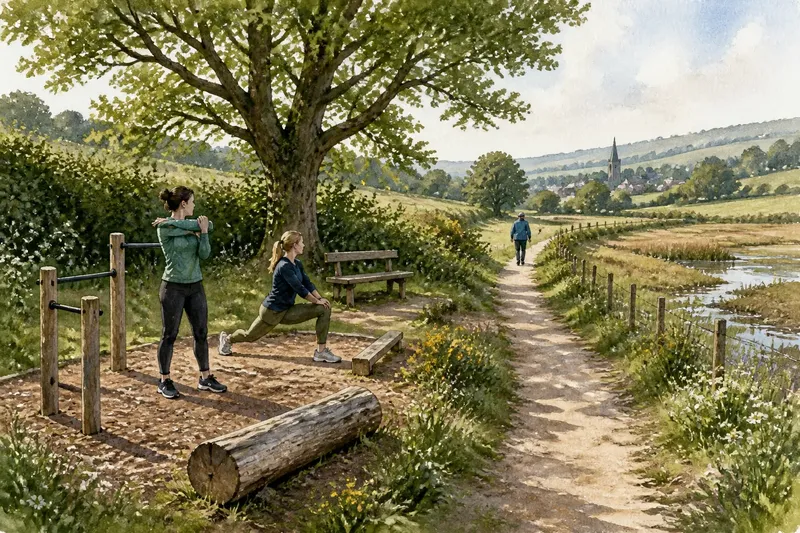
Say a community group is considering a field edge with a well-used footpath and a damp hollow nearby. They note that walkers already pause beside a mature oak, while the hollow holds water after rain. They decide to place a small stretching area on the drier ground near the oak, preserve the path’s line, and leave the hollow undisturbed. The expected result is an activity spot that draws on an existing pause point without sending visitors across wet ground or into the path’s flow.
Use natural features carefully
Logs, low banks, sturdy tree cover and changes in terrain may offer inspiration for movement, but natural features should not be treated as equipment by default. A fallen branch can shift; a bank can erode; roots can make footing unpredictable. If an activity relies on a feature, the land manager should consider its condition, intended use and maintenance before inviting people to use it that way.
Planting can help define the atmosphere of a space. Native hedgerow plants may support the site’s rural character, while a flowering margin can bring seasonal interest. Keep planting choices compatible with the site’s care arrangements, and avoid placing thorny or fragile plants where regular movement will damage them.
Let the landscape remain visible and alive, rather than treating it as a backdrop.
Plan for changing seasons
A place that feels open in summer can be exposed in winter. Leaves may shade a bench in warm weather, then drop and reveal a windier edge; grass that is pleasant underfoot when dry may become soft after persistent rain. These changes affect which parts of the site are comfortable and usable.
Think about how the space will be used across the year. A sheltered place to rest can extend the appeal of a walk on a cool day. A sunny, open patch may suit gentle movement in colder months, while shade matters during warmer spells. Drainage, leaf fall and routine grounds care deserve attention alongside the choice of activity features.
- Check where water collects after rain; if it crosses a planned activity area, choose drier ground or revise the activity plan.
- Check whether seasonal shade leaves a rest point cold or damp; if so, consider a more sheltered alternative.
- Check whether fallen leaves obscure changes in level; if they do, clear them or mark the area in a suitable way.
- Check how grass holds up under ordinary foot traffic; if it becomes churned, redirect movement or use a surface suited to local upkeep.
- Check whether wind makes an exposed pause point uncomfortable; if it does, use a naturally sheltered location where appropriate.
- Check whether routine mowing or hedge care affects access to the activity area; if it does, agree a workable maintenance arrangement with the land manager.
Balance activity and habitat
Fitness spaces share rural places with birds, insects, plants and other everyday uses. A mown strip can offer room for movement, while a less intensively managed edge may provide habitat and seasonal texture. Keeping some areas quiet or lightly used can help preserve that balance.
Before changing vegetation or ground cover, check who manages the land and whether any local permissions or ecological advice are needed. A qualified ecologist or land-management professional can help where a proposal may affect protected species or sensitive habitat.
Small design choices matter: keep repeated foot traffic away from fragile planting, avoid bright lighting where it would disturb a dark landscape, and plan maintenance so that useful habitat is not removed unnecessarily.
Questions about landscape design?
Can a footpath double as an exercise circuit?
It can support informal movement, but shared paths should remain comfortable for ordinary walkers and other users. Put any activity prompts or stopping places where they do not interrupt the route.
Which natural features can support exercise?
Stable, well-understood features may inspire low-impact activities, but their condition and suitability need careful assessment. Do not present an unmaintained log, bank or tree as exercise equipment without the land manager’s approval.
How can a site stay useful in wet weather?
Observe where water gathers and how the ground responds to regular use, then keep activity on areas that remain suitable. Where surfaces, drainage or access raise safety concerns, seek advice from the responsible land manager or a qualified professional.
How much planting belongs around a fitness area?
Enough to complement the place, if the planting suits local conditions and can be maintained. Leave space for movement and preserve sight of the wider landscape rather than enclosing the area without purpose.
Keep the setting distinctive
A thoughtful countryside fitness space need not imitate an urban gym or tame every uneven edge. Its identity can come from a path people already know, a sheltered pause beneath a tree or a view that changes with the weather. Countryside fitness space design is strongest when those details shape activity without asking the land to become something else.
Before adding a feature, ask what the site already does well and what it needs to keep doing. That simple question can help a community create a place for movement that belongs to its landscape in every season.