A Midwinter Walk Around a Local Fitness Space
A midwinter walk around a local fitness space helps you read frost, bare branches and changing daylight, so you can plan a more comfortable seasonal visit.
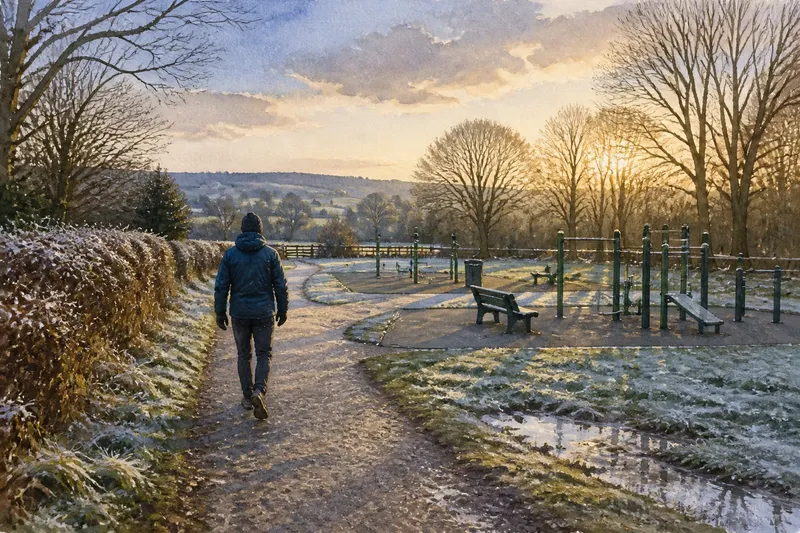
Will a midwinter walk around a local fitness space feel inviting, or will cold, damp ground send you straight home? The answer often lies in winter details: frost in the shade, wind across an open field, and how quickly daylight fades behind a ridge of trees.
A quiet visit can show how the season changes the feel of a recreation ground, outdoor court or exercise trail. Stay on routes open to visitors, follow any site guidance, and observe conditions without trying slippery surfaces or entering closed areas.
Read the winter ground
Start with what the weather has left underfoot. Frost can remain in shaded corners after sun reaches an open court; wet leaves can hide the outline of a path; and soft ground may make a familiar shortcut less appealing. Look from a suitable path rather than stepping onto a surface whose condition is uncertain.
Notice how water and cold change the route through the space. A dip in a field may hold rain, while a gravel track can stay more distinct than the grass beside it. These observations help explain why a route that feels easy in summer may call for a slower pace or a different approach in winter.
Say you arrive at an outdoor court after rain and see a clear gravel path alongside a muddy grass cut-through. You choose the gravel route and find it leads to the court without crossing the wet patch. The visible result is a drier approach; the trade-off is that the route may take you past a different part of the site.
Keep the visit observational. Do not scrape away frost, test a slick slope or assume that a surface is safe because it looks firm from a distance.
Watch the changing light
Bare branches open views that summer foliage hides, but they also change the way light falls. A shaded bench can feel colder than an open patch nearby, while low winter sun may make it harder to see a ball, a path edge or a notice. Look at how the space changes as the sun moves, rather than judging it from one bright moment.
At a rural site, hills, tree belts and buildings can shorten the useful light even when the sky remains clear. If you are planning a visit, check the day’s local conditions and allow time to leave before the route becomes difficult to see. For an evening session, follow the facility’s rules and use only areas intended for that purpose.
Light also affects the mood of a shared space. A field with long shadows may feel quiet and spacious; the same shadows can make a smaller court seem enclosed. A short visit at a different time of day can reveal whether a favourite spot is comfortable only while it receives direct sun.
Notice winter wildlife
Winter changes what can be heard and seen around a fitness space. With fewer leaves overhead, bird movement may be easier to notice; damp ground can make footprints visible near a path. Pause without approaching nests, feeding wildlife or leaving the public route.
Look for the way recreation and habitat share the same edges. A hedge may provide cover for birds while screening a path from the wind. A grassy margin left unmown can be quiet in winter, yet it may also narrow the route people use. Treat such signs as clues about the landscape, not permission to enter protected or private ground.
If an organised activity is taking place, give wildlife and participants space. Keep dogs under control where required, take litter home, and follow local notices about seasonal restrictions.
Plan for cold weather
Winter comfort depends on more than shelter. Wind can make an exposed waiting spot feel markedly colder than a sheltered path; damp gloves can make a short pause unpleasant; and a sudden shower can change how long someone wants to stay. Dress in layers that can be adjusted, and bring what you need for the conditions rather than relying on a building being open.
Notice which parts of the site offer a natural break from wind, such as a tree line or wall, without assuming that every sheltered edge is available for waiting. A wall may be close to activity but leave little room to pass; a tree belt may offer cover yet sit away from the route. Consider how you would move between activity and a pause without blocking others.
Imagine you plan to use an outdoor fitness trail on a cold, breezy afternoon. Your starting point is a short daylight window, damp ground and a wind-exposed field. You check the site’s public information, choose the route that stays on the surfaced path, wear a warm outer layer and carry gloves. On arrival, you see that the field is more exposed than expected, so you shorten the visit and leave while the path remains clearly visible. The trade-off is a briefer session in return for a more comfortable return route.
What changes in winter?
Why does the same route feel different in winter?
Cold, damp ground and reduced daylight can change pace, comfort and visibility. Bare vegetation may make landmarks easier to see, while frost or leaves can obscure the surface.
How can I choose a suitable time?
Check local weather and the facility’s public information, then choose a time that leaves enough daylight for your planned visit. Conditions can shift, so be ready to shorten the outing if the route becomes hard to see or the ground looks unsuitable.
What should I bring for a cold visit?
Choose clothing in layers, footwear suited to the route and any personal essentials you normally need outdoors. Carry a drink and a charged phone if appropriate, but do not assume there will be an open building or a place to warm up.
Should I use a route that looks icy?
No. Avoid walking or exercising on a surface that appears slippery, and follow any closures or local advice. If you are unsure whether a route is suitable, choose another open path or postpone the visit.
Keep useful winter notes
A short note can make a later visit easier to plan. Record the weather you encountered, the parts of the route that remained shaded, and where wind or wet ground affected your comfort. Keep what you saw separate from what you assume: “frost remained beside the north hedge” is clearer than “the whole field is icy”.
- Check whether frost is visible on the route; if it is, avoid that surface and choose a clearly suitable open path or postpone.
- Check whether wet leaves cover a path edge; if they do, slow down and stay on the most visible part of the permitted route, or turn back if footing is uncertain.
- Check whether the activity area is exposed to wind; if it is, choose a sheltered permitted area or make the visit shorter.
- Check whether the route remains easy to see in the available daylight; if it does not, leave by a clearer route or return another time.
- Check whether a seasonal notice or closure applies; if it does, follow it and select another permitted activity or location.
- Check whether you have suitable layers and footwear for the conditions; if you do not, change your plan or postpone the visit.
A midwinter walk around a local fitness space can reveal how the landscape changes the experience from one visit to the next. Note the season, weather and visible ground conditions, then use those observations to choose a route and time that suit the day. In particular, check the shaded sections before setting off: they may hold frost after the sunnier parts have cleared.